
Pictured above: Downtown Denver’s 16th Street in 1933. Denver Public Library, Western History Collection.
These are excerpts from Chapter 1 of our book, “A Century of Impact: The Denver Foundation’s First 100 Years.” It offers a glimpse into the history of the foundation, highlighting our ongoing journey to advance diversity, equity, and inclusion in our work.
In 1925, a group of like-minded Denverites—who went unnamed in the original charter— created The Denver Foundation. They were inspired by Cleveland’s example but also by the legacy of giving within Denver’s own communities, especially the gifts of talent and time that were offered up so freely and so often among neighbors. Seeing that financial gifts to traditional charity funds often stagnated, they founded this new “community chest” to support the greater good by combining private, public, and corporate funds that were donated and grew over time in ways traditional charity funds could not. Melding permanence and growth with flexibility and ingenuity, the foundation thrived and evolved in its first century.
A Forward-Thinking Mindset
We can’t predict the future, but we can plan for it. When collaborating with current and future donors, The Denver Foundation takes this truth to heart. Donors who plan to give assets to a philanthropic cause during their lifetime or as part of their estate planning do so with thoughtful intention. Community foundations seek to safeguard those intentions and ensure that the funds remain in play for the causes dear to each donor’s heart.
The Denver Foundation had a forward-thinking mindset from the start. As one of the first 25 community foundations in the U.S., the foundation purposefully sought to help donors prudently plan for their city’s future through endowments, donor-advised funds, and, eventually, other types of charitable funds. The 1926 charter begins by laying out goals for the foundation’s work, emphasizing a desire “to substitute contemporary wisdom for forethought in charities.” The focus was planning for the future by equipping donors with the opportunities and tools they needed and an endowment or fund that promised to grow, sustain itself, and remain beneficial for years, decades, even centuries to come.
As the original charter states, the foundation’s original primary purpose was to support Denver communities through aid in the social services, education, and health categories while avoiding charitable funds becoming obsolete due to changes in circumstances. In the vernacular of its era, the charter warns of “dead hands”: philanthropic funds dedicated with the best of intentions but whose causes no longer exist. The charter even gave an example: charitable gifts in the 1800s that were earmarked to support the care and housing of those with leprosy. By 1925, as leprosy treatments emerged, those funds could offer far more limited benefits. With this as just one example among many, The Denver Foundation offered donors the solution of giving to a community foundation that could adapt so that their funds could remain impactful well into the future.
The Founders
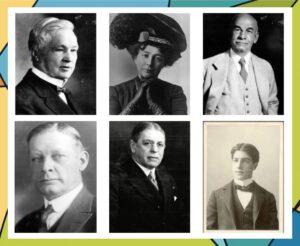
In 1925, some “public-minded men” and representatives of seven local banks modeled The Denver Foundation after the Cleveland Foundation because, as they noted in their charter, within five years of its launch, the Cleveland Foundation “had been assured of bequests to a total of more than $100,000.00, which gave ample proof of the usefulness of the plan.” In like manner, The Denver Foundation sought to encourage the growth and meaningful use of charitable funds in its own city.
Today, dozens of committees made up of volunteer community members review and select grantees. However, the original charter had a unique process for choosing the members of its lone “Distribution Committee,” charged with reviewing grant applications and awarding funds. Per the charter, the foundation’s administrative functions and grant awards were judiciously overseen by local authority figures who appointed the seven members of the committee. Two of those members were to be chosen by the trustee banks that managed the funds. The other five were selected by the mayor of Denver, the chief justice of the Colorado Supreme Court, the chief judge of the U.S. District Court, the chief judge of the Denver District Court, and the judge of the Probate Court, respectively.
The original Distribution Committee included some well-known names: entrepreneur John Kernan “J.K.” Mullen, industrialist J.F. Welborn, insurance executive F.W. Standart, educator Emily Griffith, plumbing supplier Martin O’Fallon, and Judge Ira C. Rothgerber Sr. The professional experience of these first committee members helped The Denver Foundation get off the ground.
The First Gift of Many
After two years of thoughtfully overseeing the administrative and legal setup of the organization, The Denver Foundation received its first gift in 1927 from Distribution Committee member J.K. Mullen.
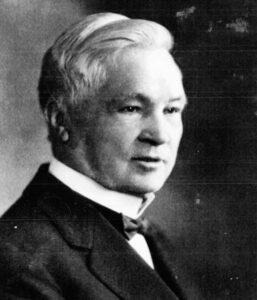
The Irish-born Mullen, founder of the Colorado Mining and Elevator Company, was also known for his success in the flour mill industry with J.K. Mullen and Company. His $1,000 donation paved the way for the foundation’s first recorded grant to support the Community Chest of Denver—today’s Mile High United Way. Mullen’s gift was split into two grants, half supporting the Community Chest and the other $500 covering administrative costs for The Denver Foundation as it established itself. With that first gift, the foundation launched its legacy of recognizing and addressing needs within the Denver community.
The foundation has grown alongside the city of Denver, evolving to keep pace with its ever-changing city while staying true to its original vision.
The First Permanent Endowment
In the nature of a true community foundation, more donations quickly followed philanthropist Mullen’s inaugural gift. The Denver Foundation received its first permanent endowment in November 1929 from Alice Coleman. The Alice Sherwin Coleman Fund—at the time known as a “restricted fund”—benefited three agencies for the care of older adults. Though two of those agencies no longer serve Metro Denver, the foundation has since applied the funds to organizations with similar purposes, such as the Anchor Center for Blind Children and the National Sports Center for the Disabled.
One of the first 25 community foundations in the United States, The Denver Foundation purposefully helps donors prudently plan for the future.
This gift lives on today in the foundation’s Care Fund, a combined fund that supports the well-being of people with low incomes who also live with developmental, intellectual, or physical disabilities, and people who are visually impaired or blind. Coleman’s gift was just the first of many such endowments that have adapted to continue to support the community and sustain The Denver Foundation’s work.
